

ISO Certification in India 2027 – Types, Benefits & Process
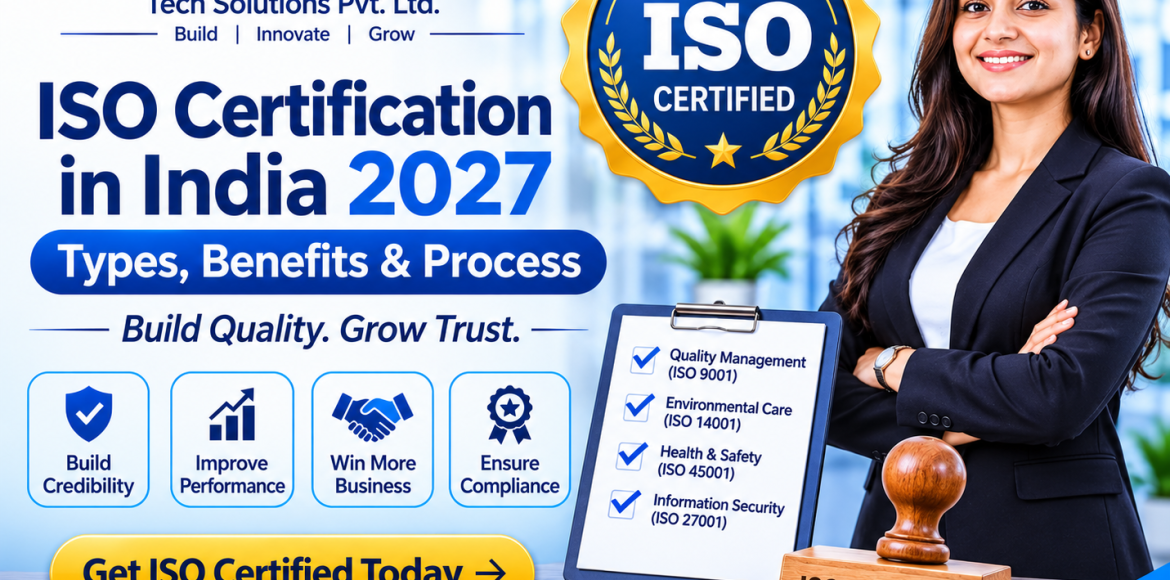
ISO Certification in India – Complete Guide for Businesses in 2027
Are you planning to make your business more professional, trustworthy and competitive in 2027? Getting an ISO certification can help your organisation demonstrate its commitment to quality, safety, efficiency and customer satisfaction.
ISO certification is valuable for startups, small businesses, manufacturers, service providers, IT companies and growing organisations. It provides a structured approach to managing business processes and improving operational standards.
At Bzweave Tech Solutions Pvt. Ltd., we help businesses understand ISO certification requirements and access certification-related services according to their business needs.
What Is ISO Certification?
ISO stands for the International Organization for Standardization. It develops internationally recognised standards that help organisations improve their processes, management systems and operational performance.
ISO certification is an independent assessment of an organisation’s management system against the requirements of a particular ISO standard.
It can help businesses improve credibility, demonstrate compliance with relevant standards and build confidence among customers, suppliers and business partners.
Why Is ISO Certification Important for Your Business?
ISO certification can provide several advantages to organisations.
1. Builds Business Credibility
An appropriate ISO certification demonstrates that your organisation follows a recognised management system standard.
2. Improves Customer Confidence
A structured quality management system can help improve customer satisfaction and consistency.
3. Supports Business Growth
Some customers, corporate buyers and tenders require specific ISO certifications as part of their supplier qualification criteria.
4. Improves Internal Processes
Implementing ISO standards can help businesses establish better procedures, responsibilities and documentation.
5. Strengthens Market Reputation
ISO certification can help your business demonstrate its commitment to quality, safety and continuous improvement.
Types of ISO Certifications for Businesses
Different ISO standards address different business requirements. Some commonly used standards include:
ISO 9001 – Quality Management System
Helps organisations establish processes focused on consistent quality, customer satisfaction and continual improvement.
ISO 14001 – Environmental Management System
Focuses on managing environmental responsibilities and improving environmental performance.
ISO 45001 – Occupational Health and Safety Management System
Helps organisations manage workplace health and safety risks.
ISO 27001 – Information Security Management System
Helps organisations manage information security risks and protect business information.
ISO 22000 – Food Safety Management System
Designed for organisations involved in the food chain to manage food safety risks.
ISO 13485 – Medical Devices Quality Management
Applies to quality management systems for organisations involved in medical devices.
ISO 50001 – Energy Management System
Helps organisations improve energy performance and manage energy consumption.
ISO 22301 – Business Continuity Management
Helps organisations prepare for disruptions and improve business resilience.
Who Can Apply for ISO Certification?
ISO certification may be suitable for:
Startups and newly registered companies
Private Limited Companies and LLPs
Manufacturing businesses
IT and software companies
Healthcare organisations
Educational institutions
Food processing companies
Consultants and service providers
Small and medium enterprises
The appropriate standard depends on your business activities and the management system you want to establish.
Documents Required for ISO Certification
Documentation varies according to the selected ISO standard, certification scope and organisation.
Commonly required information may include:
Company registration details
Business address proof
Organisation profile
Description of products or services
Employee and operational details
Applicable management system documentation
Policies, procedures and records
Additional documents may be required depending on the certification standard.
ISO Certification Process
The general certification process involves the following steps:
Select the ISO Standard: Identify the standard relevant to your business.
Understand Requirements: Review the applicable management system requirements.
Prepare Documentation: Develop required policies, procedures and records.
Implement the System: Apply the management system in your organisation.
Certification Audit: An independent certification body assesses conformity.
Certification Decision: The certification body reviews audit findings and decides whether to issue the certificate.
Surveillance Audits: Maintain conformity through applicable follow-up audits.
Certification is not automatic. It depends on meeting the applicable requirements and the certification body’s assessment.
Why Choose Bzweave for ISO Certification Services?
Bzweave Tech Solutions Pvt. Ltd. supports startups, entrepreneurs and established organisations looking for ISO certification-related assistance.
Our services include:
Guidance on selecting suitable ISO standards
Documentation support
Certification process assistance
Business compliance support
Assistance with certification-related requirements
We aim to make the certification journey easier to understand so that businesses can focus on their growth.
Get Started with ISO Certification in 2027
Want to improve your business credibility and establish a recognised management system?
Connect with Bzweave Tech Solutions Pvt. Ltd. to understand which ISO certification may be appropriate for your organisation.
Contact Us Today
Website: https://www.bzweave.com
Phone: +91 9229534398
Bzweave Tech Solutions Pvt. Ltd. – Your Business Growth Partner.